Skip to content

Without proper lighting, you can only enjoy your deck during daylight hours. In College Station, TX, where summer temperatures often climb above 95°F by early afternoon, evenings are usually a more comfortable time to spend outdoors. That makes deck lighting a practical addition to your home, not just a decorative touch.
The right deck lighting options make your outdoor space safer, more inviting, and easier to enjoy after sunset. Whether you’re hosting family dinners, gathering with friends, or relaxing outside after a long day, good lighting helps you make the most of your deck.
In this guide, we’ll explore the best outdoor deck lights for Texas homes, from stair and recessed lighting to smart lighting systems. You’ll also learn what to look for when choosing fixtures that can handle the Texas heat, humidity, and strong sun.
What Are the Best Deck Lighting Options?
For most Texas homes, the best deck lighting is a low-voltage deck lighting LED system. It offers efficient operation, flexible fixture options, and reliable illumination for stairs, railings, and walking surfaces.
Here’s how the main options compare:
| Deck lighting type | Best use | Main benefit |
| Low voltage deck lighting | Full-deck illumination | Flexible layouts and centralized controls |
| LED deck lights | Everyday lighting | Low energy use and long service life |
| Solar deck lights | Accent lighting | No hardwired power connection |
| Deck stair lighting | Steps and changes in elevation | Better visibility when walking |
| Post cap lights | Railings and deck perimeter | Soft ambient lighting |
| Recessed deck lights | Walking surfaces | Clean, low-profile appearance |
| Underrail lighting | Deck edges and seating areas | Even, downward illumination |
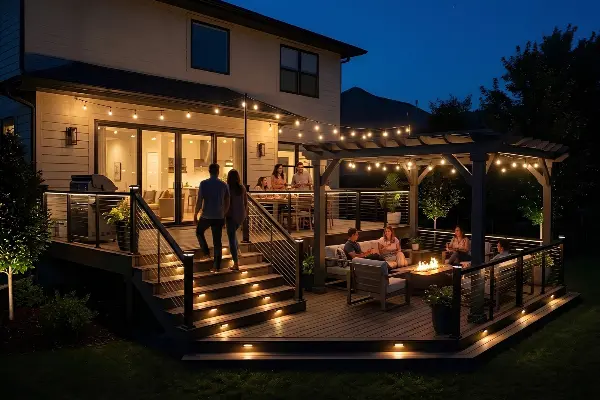
For the best results, combine several fixture types rather than relying on one light source. Stair lights improve visibility, post cap lights define the perimeter, and recessed or underrail fixtures help illuminate the main deck surface.
Why Deck Lighting Matters in Texas
In College Station and the surrounding Brazos Valley, summer afternoons can be uncomfortably hot. Outdoor spaces often become more enjoyable in the evening, making deck lighting a practical addition to your home.
A well-planned lighting system with the best deck lighting options helps you:
- Improve visibility: Illuminate stairs, deck edges, and walking paths.
- Extend outdoor use: Make it easier to enjoy dinners, gatherings, and quiet evenings after dark.
- Create a welcoming atmosphere: Use warm lighting to make seating and entertaining areas feel comfortable.
- Highlight your deck design: Accentuate railings, architectural details, and landscaping.
- Complete your outdoor living space: Give a new or remodeled deck a more finished appearance.
Lighting can also improve your home’s nighttime curb appeal. While it cannot guarantee a higher resale price, it helps make an outdoor living area look more functional and thoughtfully designed.
1. Low Voltage Deck Lighting
Low voltage deck lighting is one of the most versatile options for residential decks. These systems typically use a transformer to convert standard electrical power to a lower voltage, commonly 12 volts, for compatible outdoor fixtures.
A single system can power multiple fixture types, including stair lights, post cap lights, and recessed deck lights.
Benefits of low voltage deck lighting include:
- Flexible fixture placement and design options
- Efficient operation when paired with LED fixtures
- Centralized timers and lighting controls
- Compatibility with many smart lighting systems
- A cohesive look across the entire deck
Installation still requires proper planning. The transformer must be sized for the connected fixtures, and wiring, connectors, and junction points must be suitable for outdoor conditions.
For new deck construction, plan the lighting layout before building the structure. This makes it easier to conceal wiring and position fixtures where they provide the most useful illumination.

2. LED Deck Lights
LED deck lights are an excellent choice for homeowners who want dependable lighting without excessive energy use. LEDs generally consume less electricity and last longer than traditional incandescent or halogen bulbs.
They also come in many styles, from compact stair lights to post cap fixtures and recessed lights. This makes them one of the most popular deck lighting options in the area.
When choosing LED deck lights, consider color temperature:
- 2700K–3000K: Warm white light for a relaxed, welcoming atmosphere.
- 3500K–4000K: A more neutral white that can work well in functional areas.
- Above 4000K: Cooler light that may suit certain modern designs but can feel harsh when overused in residential spaces.
For most decks, warm white lighting creates a comfortable environment without overwhelming the natural colors of wood or composite decking.
Look for fixtures specifically rated for outdoor use, with suitable weather resistance and materials designed to withstand prolonged sun exposure.

3. Solar Deck Lights
Solar lights are increasingly popular today. A big reason is that they use small solar panels to charge built-in batteries during the day, so they light up even after the sun goes down. They’re useful when you want simple accent lighting without installing additional wiring.
Common applications include:
- Deck post caps
- Fence lines and nearby garden borders
- Low-level decorative lighting
- Areas where running electrical wiring would be difficult
However, solar lights have limitations. Factors such as sunlight levels, battery usage, weather, and panel quality can all impact their effectiveness. Shaded decks and cloudy days can reduce charging. And on the flip side, prolonged heat and UV exposure can shorten the life of some components.
For these reasons, solar lights are generally better for decorative accents than as the primary light source for stairs or busy walking areas. If you choose solar fixtures for a Texas deck, look for UV-resistant housings, replaceable batteries when available, and products designed for outdoor temperature extremes.

4. Deck Stair Lighting for Better Visibility
Deck stair lighting deserves special attention because steps can be difficult to see in low light. Properly positioned fixtures help people identify each tread and navigate elevation changes more confidently.
Two common options are riser lights and tread lights.
Riser lights are installed on the vertical face of a stair and direct light down onto the step below. They provide a clean look and can be integrated into a low-voltage deck lighting setup.
Tread lights illuminate the horizontal walking surface. Depending on the fixture design, they may be recessed or surface-mounted.
When planning deck stair lighting:
- Illuminate each step consistently.
- Avoid bright fixtures that shine directly into people’s eyes.
- Choose weather-resistant fixtures designed for outdoor installation.
- Consider how the lights will look from the yard and nearby seating areas.
- Whenever possible, plan wiring access and fixture placement before installing new decking.
The goal is clear, comfortable visibility—not simply adding as many lights as possible.

5. Post Cap Lights and Underrail Lighting
Post cap lights sit on top of deck railing posts. They help define the deck’s perimeter while adding soft ambient illumination. These fixtures are available in traditional, contemporary, and minimalist designs. These options are essential to making it easier to coordinate lighting with your home’s architecture and railing style.
Underrail lighting takes a different approach. Fixtures installed beneath the railing cast light downward onto the deck surface, helping reduce dark areas without adding bulky hardware to the top of the rail.
Both options can work well with wood and composite decks. Before choosing fixtures, make sure they are compatible with your railing setup. Also make sure they flow with the overall layout of your space. For a balanced design, use post cap lights to define the perimeter and underrail lighting where you need extra coverage.

6. Recessed Deck Lighting
Recessed deck lights sit flush with the surrounding surface, creating a streamlined appearance. They’re often used along deck edges, around designated seating areas, or to highlight changes in the deck layout.
These fixtures can add visual interest without taking up usable space or introducing protruding hardware.
However, recessed lighting requires careful planning. Improper installation can let moisture enter the structure or violate the decking manufacturer’s installation requirements.
For composite decking, choose compatible fixtures and follow the manufacturer’s guidelines for cutting, spacing, and installation. If you’re building a new deck, incorporating recessed lights into the original design can simplify wiring and help achieve a cleaner finish.

How Does the Texas Climate Affect Deck Lighting?
College Station’s heat, humidity, rain, and strong sun exposure can take a toll on outdoor fixtures. Choosing products designed for these conditions helps reduce premature wear and maintenance.
Keep these considerations in mind when choosing deck lighting options for your decking area:
| Climate challenge | What to look for |
| Intense sunlight | UV-resistant housings and finishes |
| High temperatures | Fixtures and batteries rated for expected temperatures |
| Humidity and rain | Appropriate wet-location ratings and sealed connections |
| Corrosion | Corrosion-resistant hardware and fixture materials |
| Temperature changes | Outdoor-rated wiring, connectors, and installation methods |
Regular maintenance also matters. Clean solar panels, inspect exposed fixtures, and check for loose connections or damaged housings. Replace failing components before they affect the rest of the system.
A professional installer can help select compatible products and protect wiring and connections against outdoor exposure.
Deck Lighting Trends for 2026
Today’s deck lighting designs increasingly focus on convenience and a clean, integrated appearance.
Smart lighting controls: Smart-compatible transformers and fixtures let homeowners schedule lights, adjust brightness, and control compatible systems from a phone or voice assistant.
Color-tunable LEDs: Some fixtures offer adjustable white tones or RGBW color options. These can create different moods for everyday use, parties, and seasonal gatherings.
Minimalist fixtures: Recessed lights and slim underrail fixtures provide illumination without drawing attention away from the deck itself.
Integrated lighting: Coordinating lights with railing systems, stairs, and composite decking during construction can produce a more cohesive result.
The best trend to follow is the one that suits how you use your outdoor space. Prioritize visibility and comfortable lighting before adding decorative features.
How Much Does Deck Lighting Installation Cost?
The cost of professional deck lighting depends on the deck’s size, fixture selection, wiring requirements, and whether the work is part of a new build or an upgrade to an existing deck.
As a preliminary budget estimate, basic low-voltage deck lighting might cost around 1,500–3,500, while larger or more complex installations could reach 4,000–8,000 or more. These figures are estimates, not verified current local quotes, and actual costs may fall outside these ranges.
Factors that influence the final price include:
- Number and type of fixtures
- Length and accessibility of wiring runs
- Transformer capacity and control features
- Installation in an existing deck versus new construction
- Additional work required to access or modify the deck structure
Ask for an itemized estimate that identifies the fixtures, controls, installation work, and any additional electrical requirements. This makes it easier to compare proposals and understand what’s included.
Plan Your Deck Lighting With College Station Deck Builders
The right deck lighting combines practical illumination with a design that complements your home. Low voltage LED systems provide a flexible foundation, while stair lights, post cap fixtures, and recessed lighting help create a balanced, functional outdoor space.
Whether you’re planning a new deck or updating an existing one, thinking through the lighting early can help you avoid unnecessary installation work and achieve a more cohesive result.
Ready to make your deck more comfortable and inviting after dark? Contact College Station Deck Builders to discuss your deck lighting options. Our team can help you explore fixture styles, plan lighting placement, and coordinate the design with your outdoor living space.
Schedule a design consultation to discuss your project in College Station, Bryan, and the surrounding Brazos Valley.

Frequently Asked Questions
What are the best deck lighting options for Texas homes?
Low voltage LED deck lighting is one of the best choices for Texas homes. It’s energy-efficient, reliable, and works with many fixture types. Stair lights make steps easier to see, while post cap and underrail lights add a soft glow. Recessed lights and solar deck lights can provide extra lighting where needed.
What is the best lighting for deck stairs?
Riser lights and tread lights are both good options for deck stairs. Riser lights shine down onto each step, while tread lights brighten the walking surface. Choose outdoor-rated fixtures and place them where they light up the stairs evenly without shining into people’s eyes.
Are solar deck lights worth it in Texas?
Solar-powered lights are a good option for adding decorative lighting, especially on decks that get plenty of sunlight. However, shade, cloudy weather, and Texas heat can affect how well they work and how long they last. For stairs and areas that need steady lighting, wired lights are usually more reliable.
How much does professional deck lighting installation cost in College Station?
Deck lighting costs depend on your deck size, the type of lights you choose, and how much wiring is needed. A basic system may cost around 1,500–$ 3,500, while larger or more detailed setups can run 4,000–$ 8,000 or more. These are general estimates, so it’s best to request a quote for your project.
Does deck lighting increase home value?
Deck lighting can make your outdoor space more attractive and useful, which may appeal to future buyers. However, how much value it adds depends on your home, deck design, and local housing market. The biggest benefits are better visibility, a more welcoming outdoor space, and more time to enjoy your deck.
Can you add lighting to an existing deck?
Yes, you can add lighting to most existing decks. Popular options include low-voltage lights, stair lights, post cap lights, and other outdoor deck lights. Installation depends on how your deck is built and how easily you can run the wiring. Planning the layout ahead of time helps keep the finished look clean and avoids unnecessary changes to your deck.