Skip to content
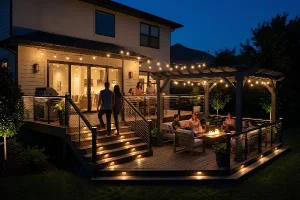
A residential deck installation is one of the best ways to expand your outdoor living space and increase your home’s value, but it also requires careful planning. For College Station homeowners, success depends on more than choosing a style you like. Local climate, soil conditions, building codes, material selection, and long-term maintenance all shape how well your deck performs over time.
Unlike many parts of the country, the Brazos Valley presents unique challenges for new deck construction. Intense Texas sun, high humidity, expansive clay soils, and termite activity can shorten the lifespan of a poorly designed deck. Choosing the right foundation, using materials suited to the local climate, and following Texas deck-building code requirements help ensure your investment stays safe, attractive, and structurally sound for decades.
This guide covers what homeowners should know before starting a new deck project: permits, budgeting, design considerations, material options, and planning tips, so you can make informed decisions, avoid costly mistakes, and create an outdoor space that’s built to last. Let’s start with what a professional deck design and installation team can offer.
Key Takeaways
● Learn which permits and Texas building codes apply before you start a residential deck installation in College Station.
● Compare composite, PVC, pressure-treated lumber, and cedar to find the best decking material for your home and budget.
● Discover how expansive clay soils and severe Texas weather influence footing design, structural engineering, and long-term deck performance.
● Use practical deck planning tips, layout ideas, and sizing recommendations to create an outdoor space that fits your lifestyle.
● Understand typical deck installation costs and return on investment so you can budget confidently.
● Find out what separates experienced local deck builders from inexperienced contractors before you hire.
● Avoid common planning and construction mistakes that lead to costly repairs, code violations, or premature deck failure.
Understanding College Station Building Permits and Code Requirements
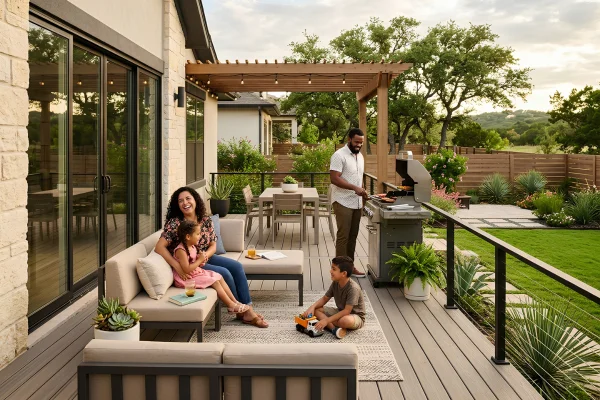
Before anything else, understand local permitting and building code requirements. Permits aren’t just paperwork; they help ensure your new deck is structurally sound, safe to use, and compliant with local regulations. Meeting these requirements protects your investment and helps you avoid costly problems later. (Not sure whether your project needs one? Contact our team and we’ll walk you through it.)
Does Building a Deck Require a Permit in College Station?
In most cases, yes. If you’re building a deck in College Station, you’ll typically need a building permit from the City of College Station before construction begins. Under the International Residential Code (IRC) that Texas jurisdictions adopt, a deck generally does not need a permit only when it is freestanding (not attached to the house), no larger than 200 square feet, no more than 30 inches above grade at any point, and does not serve a required exit door. Most residential decks exceed at least one of those limits, so a permit is usually required, along with inspections to verify the deck meets current standards.
As part of the permit process, homeowners or contractors usually submit construction drawings, structural details, and material specifications for review. Once approved, inspections are performed during construction to confirm the deck is built to the approved plans. Skipping this process can lead to fines, delays, required modifications, difficulty selling your home, and even insurance complications if an accident occurs.
What Do Deck Building Code Requirements Cover?
Texas deck building code requirements are designed to ensure every deck is safe, durable, and capable of supporting the loads it was built for. Depending on the project, inspectors may review:
● Footing size, depth, and placement
● Post, beam, and joist sizing and spans
● Ledger board attachment to the home
● Deck framing hardware and fasteners
● Stair construction and handrails
● Guardrail height and baluster spacing
● Overall structural stability and load requirements
Following these standards helps prevent common problems such as structural movement, loose railings, sagging framing, and premature failure. If you already have an aging or non-compliant structure, our deck repair and restoration service can bring it back up to standard.
Why Local Conditions Matter in College Station
Building codes set the minimum standard, but local site conditions matter just as much. Much of the Brazos Valley contains expansive clay soils that swell when wet and shrink during dry periods. Without properly designed footings, seasonal soil movement can cause decks to settle unevenly, shift, or develop structural issues over time.
The local climate plays a role too. Intense UV exposure, high humidity, and frequent moisture can shorten the lifespan of decking materials and connectors if they aren’t chosen for Texas conditions. An experienced local builder helps ensure your foundation, framing, hardware, and decking are all selected with these regional challenges in mind, creating a safer, longer-lasting outdoor living space.
Best Deck Materials for Texas Homes
Choosing the right decking material is one of the most important decisions in any deck project. The right product should fit your budget, complement your home’s style, and stand up to the Texas climate. In College Station, intense sunlight, high humidity, heavy rain, and termite activity all affect how well a deck performs, making material selection as important as quality construction.
When comparing decking materials, consider:
● Upfront installation cost
● Long-term maintenance requirements
● Expected lifespan
● Resistance to moisture, insects, and UV exposure
● Surface temperature during hot Texas summers
● Overall appearance and curb appeal
● How you plan to use the space
Composite and PVC Decking
Composite and PVC decking are two of the most popular choices for residential decks because they combine durability with minimal maintenance.
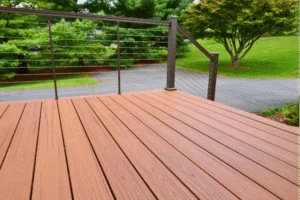
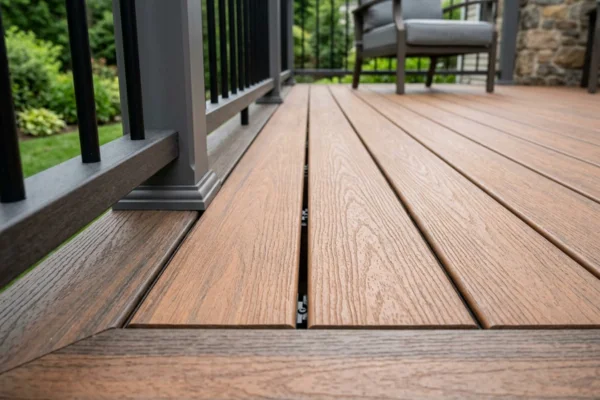
Composite decking from manufacturers such as Trex and TimberTech blends recycled wood fibers with polymers to resist moisture, warping, rot, and insect damage. PVC decking, including products from AZEK, contains no wood fibers, making it even more resistant to moisture and well suited to humid climates.
Both perform well in the Brazos Valley, but keep one factor in mind: heat. Like most decking, composite and PVC boards can get warm in direct summer sun. Choosing lighter colors, adding a pergola or shade structure, and planting shade trees can meaningfully improve comfort during the hottest months.
While composite and PVC cost more upfront than wood, they typically need only occasional cleaning and carry manufacturer warranties ranging from 25 to 50 years. For many homeowners, the reduced maintenance and longer lifespan help offset the higher initial investment.
Pressure-Treated Lumber
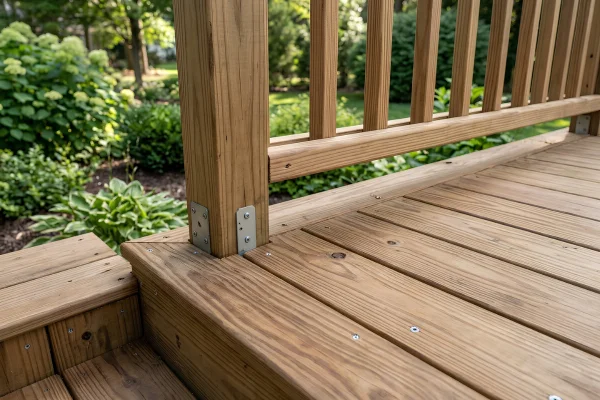
Pressure-treated lumber remains one of the most affordable and widely used decking options. Modern pressure-treated pine is infused with preservatives that improve resistance to rot, fungal decay, and termites, making it a dependable choice for structural framing and budget-conscious projects.
Wood decks do require more upkeep than composite. Regular cleaning, staining, and sealing protect the wood from moisture and the intense Texas sun, extending its lifespan and keeping it looking good.
Cedar Decking
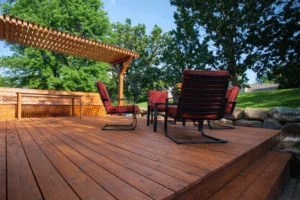
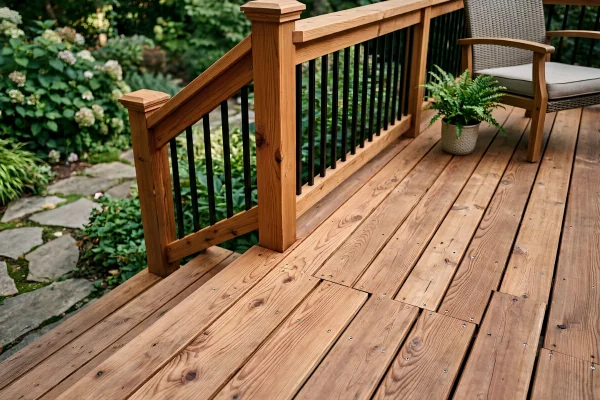
Cedar offers a natural, upscale appearance many homeowners love. Its rich grain, dimensional stability, and natural resistance to insects and decay make it attractive for custom outdoor living spaces.
Like other natural woods, cedar benefits from routine sealing to protect it from UV and moisture. Without regular maintenance, it gradually weathers to a silvery gray and may develop surface checking or small cracks over time.
Which Material Is Best for a Texas Home?
There’s no single “best” decking material for every homeowner. The right choice depends on your priorities:
● Composite or PVC is ideal for low maintenance and maximum longevity.
● Pressure-treated lumber offers the lowest upfront cost and dependable structural performance.
● Cedar provides a premium natural look for those willing to keep up with routine maintenance.
Working with a local deck builder helps you weigh cost, maintenance, and expected lifespan so you can choose materials that perform well in the Brazos Valley while complementing your home and your long-term budget.
Structural Engineering for Clay Soil and Storm Conditions
A beautiful deck is only as strong as the structure supporting it. The framing and foundation matter every bit as much as the boards you see. In College Station, expansive clay soils, seasonal rainfall, and severe thunderstorms create structural challenges that require careful engineering from the ground up.
Without properly designed footings and secure connections, a deck can shift, settle, or pull away from the home over time. Investing in quality engineering during construction protects your safety, your home, and the long-term value of your outdoor space.
Footings Built for Expansive Clay Soil
Much of the Brazos Valley sits on expansive clay that swells when saturated and shrinks in dry weather. This constant movement places tremendous stress on foundations, the same reason homeowners often see cracked sidewalks, uneven patios, and shifting fences across the region.
For a College Station deck, contractors typically design footing systems specifically for these soils. Rather than relying on shallow foundations, they often use drilled concrete piers that extend below the active soil layer to reach more stable ground. Where soil conditions are especially challenging, helical piers may be recommended because they anchor into stable soil with minimal movement. (For lower structures, proper footing detail matters just as much — see our guide on how to frame a ground-level deck the right way.)
Designing the right foundation isn’t simply a matter of digging deeper. It’s about understanding local soil behavior and selecting the right support system for the property.
Strong Ledger Connections Protect Your Home
For decks attached to a house, the ledger board is one of the most critical structural components. It transfers the weight of the deck, furniture, and occupants into the home’s framing while helping resist movement during severe weather.
Because College Station regularly sees strong thunderstorms and high winds, ledger boards must be securely fastened with approved structural hardware and protected with properly installed flashing. Flashing prevents water from getting behind the ledger, reducing the risk of hidden wood rot that can weaken both the deck and the home’s framing over time.
A properly installed ledger connection improves structural stability while helping prevent costly repairs caused by moisture intrusion.
Structural Features at a Glance
| Structural component | Why it matters | Common professional solution |
| Footings | Prevent settling and movement caused by expansive clay soil | Deep drilled concrete piers, or helical piers where appropriate |
| Framing | Supports the deck’s weight and everyday use | Properly sized beams, joists, and hardware that meet Texas building codes |
| Ledger board | Secures the deck to the home | Structural screws or through-bolts installed to code |
| Flashing | Prevents water intrusion behind the ledger | Corrosion-resistant flashing installed between house and ledger |
| Structural hardware | Improves strength and durability | Galvanized or stainless-steel connectors rated for exterior use |
Build a Deck for Long-Term Performance
A professionally engineered deck is designed to withstand far more than everyday use. Proper foundations, quality framing, and code-compliant connections help your deck perform through years of shifting soil, heavy rainfall, summer heat, and severe Texas storms. Working with an experienced local team helps ensure your investment is built for the conditions found throughout the Brazos Valley.
Design Ideas for a New Deck in College Station
A successful deck project begins long before construction starts. The best decks aren’t just attractive, they’re designed around how homeowners actually live, entertain, and relax. Planning your layout, size, and features helps ensure your new deck complements your home, supports your lifestyle, and keeps meeting your needs for years.
Start with How You’ll Use Your Deck
Before choosing materials or finalizing a design, think about how your family will use the space on a typical day. Your answers influence everything from size and layout to the placement of stairs, railings, lighting, and shade structures. Ask yourself:
● Will the deck primarily be used for dining, relaxing, or entertaining?
● How many people do you typically host?
● Do you want space for an outdoor kitchen or grill station?
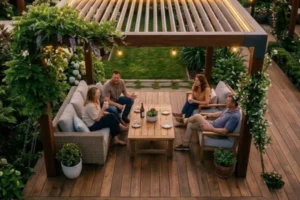
● Would a pergola or covered section make the space more comfortable?
● Will children or pets regularly use the deck?
● Do you want built-in seating, planters, or storage?
Creating a deck planning checklist before you meet with a contractor makes it easier to prioritize the features that matter most while staying within budget.
Important Deck Design Considerations
Thoughtful planning creates an outdoor living space that’s both functional and comfortable year-round. As you plan, consider:
● Sun exposure: West-facing decks get intense afternoon sun for much of the year. Shade structures, pergolas, covered roofs, or well-placed trees significantly improve comfort.
● Traffic flow: Plan convenient access between your home, yard, pool, and entertaining areas.
● Activity zones: Separate spaces for dining, grilling, and lounging make the deck feel larger and more organized.
● Lot conditions: Multi-level decks make excellent use of sloped properties while creating distinct gathering spaces.
● Pool safety: Pool decks should use slip-resistant materials and meet applicable safety requirements around water.
● Future needs: Consider electrical outlets, landscape lighting, ceiling fans, or space for a future hot tub or outdoor kitchen during the initial design.
Looking for inspiration? A few of our popular design directions include wide, welcoming deck steps, small front-porch deck ideas, and adding a gazebo on a deck. Homeowners combining a deck with ground-level living areas often pair it with patios and hardscapes or stamped concrete.
Choosing the Right Size
One of the most common homeowner regrets is building a deck that’s too small. Staying within budget matters, but adding a little extra square footage during construction is usually far cheaper than expanding the deck later.
| Primary use | Recommended minimum size |
| Small seating area | 10′ × 10′ |
| Outdoor dining | 12′ × 14′ |
| Dining and grill station | 14′ × 16′ |
| Dining, seating, and entertaining | 16′ × 20′ or larger |
| Outdoor kitchen and multiple gathering spaces | 20′ × 20′ or larger |
What Does a New Deck Cost?
The cost of a new deck depends on size, elevation, material, railing systems, stairs, site conditions, and custom features.
| Deck type | Typical installed cost |
| Pressure-treated wood | $20–$40 per sq. ft. |
| Composite decking | $30–$65 per sq. ft. |
As an example:
● A 14′ × 20′ pressure-treated deck often ranges from $5,600–$11,200.
● A 20′ × 20′ composite deck commonly ranges from $12,000–$26,000.
These are general estimates and vary with permits, site preparation, railing choices, stair configuration, drainage requirements, and other project-specific details. For an accurate number, request a free estimate tailored to your property.
Plan for Today’s Needs — and Tomorrow’s
The most successful designs balance appearance, function, and long-term value. By thinking through how you’ll use the space, choosing an appropriate size, and planning for future features, you can create an outdoor living area that enhances both your lifestyle and your home’s value for years.

The Return on Investment of a Professionally Built Deck
A residential deck installation is more than an exterior upgrade. It’s an investment in both your property’s value and your everyday lifestyle. A well-designed deck expands your usable living space, improves curb appeal, and creates a dedicated area for relaxing, dining, and entertaining.
National remodeling data, most notably Remodeling magazine’s annual Cost vs. Value Report, consistently ranks decks among the stronger outdoor projects for resale value, though returns have moderated in recent years. In general, pressure-treated wood decks recover a somewhat higher percentage of their cost than composite decks, largely because their lower upfront price makes the return math more favorable, while composite’s durability and low maintenance appeal strongly to move-in-ready buyers. Exact returns vary year to year and by regional market.
| Investment | Typical resale return* |
| Pressure-treated wood deck | ~50–65% of installation cost at resale |
| Composite deck | ~45–60% of installation cost at resale |
| Professionally designed outdoor living space | Increased buyer appeal and marketability, especially in competitive neighborhoods |
In College Station, where homes near Texas A&M and throughout the Brazos Valley continue to attract buyers, a professionally built deck can help a property stand out while offering the functional outdoor space many buyers actively seek.
More Than Just Resale Value
The value of a new deck isn’t measured only in resale dollars. Many homeowners enjoy years of additional outdoor living before they ever think about selling.
| Benefit | Long-term value |
| Expanded outdoor living space | Another comfortable area for relaxing, dining, or entertaining, without the cost of a room addition |
| Improved curb appeal | A stronger first impression for visitors and future buyers |
| Better entertaining | Dedicated space for cookouts, football watch parties, family gatherings, and holidays |
| Increased everyday enjoyment | More time outdoors during College Station’s long spring, summer, and fall |
| Added home value | An attractive feature for many prospective buyers |
Adding shade structures such as pergolas, covered roofs, or ceiling fans makes the space even more comfortable, extending outdoor use through much of the year despite the Texas heat.
A Smart Long-Term Investment
Whether your goal is boosting resale value, creating a better place to entertain, or simply enjoying your backyard more, a professionally designed deck delivers lasting benefits. An experienced local team helps ensure your investment performs well in the Texas climate while maximizing its durability and value.
Working With a Deck Builder in College Station
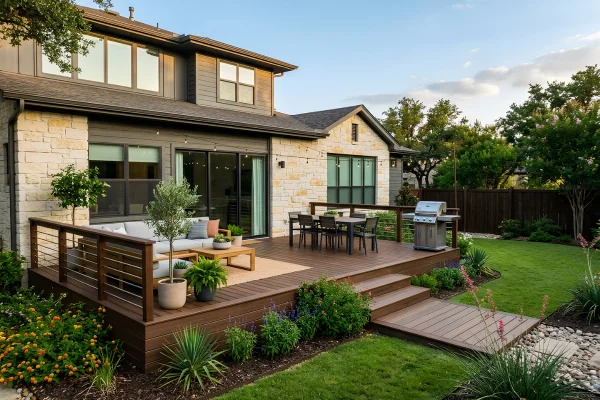
Not all contractors who offer deck building have the same experience, licensing, or accountability. In Texas, general contractors are not required to hold a state-issued license for residential work, which means the barrier to entry is low and the range of quality is wide.
Choosing the right contractor is as important as choosing the right materials. A professionally built deck should be safe, code-compliant, and designed to withstand College Station’s heat, humidity, expansive clay soils, and seasonal storms. Our team guides you through every step, from planning and permits to construction and final inspections, helping you avoid costly mistakes while protecting your investment.
When comparing local deck builders, look for proven local experience, quality workmanship, proper insurance coverage, and a track record of durable outdoor living spaces. The benefits of hiring a professional include:
● Code compliance: meets local building codes, permitting requirements, and safety standards.
● Quality construction: proper framing, footings, and structural connections for long-term durability.
● Better material selection: products chosen to perform in the Texas climate and fit your budget.
● Professional project management: help with permits, inspections, scheduling, and questions.
● Long-term value: less maintenance, fewer future repairs, and protected resale value.
● Warranty protection: workmanship warranties and manufacturer-backed product coverage.
Hiring the right contractor gives you confidence that every stage of your deck installation is completed safely, professionally, and to code, so you can enjoy a beautiful, long-lasting outdoor space built to add value and withstand the Texas climate.
Ready to Start Your Deck Project?
A professionally built deck is more than an outdoor upgrade. It’s an investment in your home’s value, functionality, and long-term enjoyment. By choosing the right materials, following Texas deck building code requirements, and designing a space that fits your lifestyle, you can create an outdoor living area that performs beautifully for years.
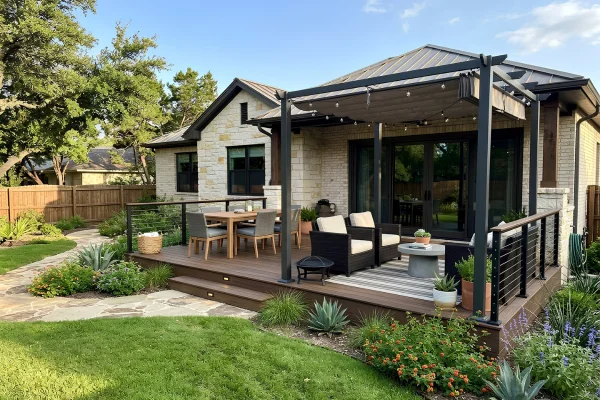
At All Pro CS Decks, we specialize in deck design and installation tailored to the Brazos Valley, along with porches, pergolas and shade structures, and pool decks. From permits and structural engineering to custom layouts and material recommendations, our team guides you through every step with quality craftsmanship and attention to detail. Whether you’re building your first deck or replacing an aging structure, we’ll help you choose the right design, materials, and features.
Ready to transform your backyard? Contact All Pro CS Decks today for a free, no-obligation consultation and estimate. We’ll evaluate your property, answer your questions, discuss your goals, and design a custom deck that complements your home and fits your budget. Call us at 979-202-4124 to get started.
Frequently Asked Questions
What is the average price to install a deck in College Station, TX?
Most deck installation projects in College Station cost $20–$40 per square foot for pressure-treated wood and $30–$65 per square foot for composite decking. Your final price depends on deck size, materials, elevation, railings, stairs, site conditions, and custom features. Request a detailed estimate for accurate pricing.
What is the 3/4/5 rule for decks?
The 3/4/5 rule is a simple method builders use to make sure deck corners form a perfect 90-degree angle. Measuring 3 feet along one side, 4 feet along the other, and confirming a 5-foot diagonal creates a square, true foundation before framing begins.
How much does it cost to install a 20×20 deck in College Station?
A 20×20 deck (400 square feet) typically costs $8,000–$16,000 for pressure-treated wood and $12,000–$26,000 for composite decking. Final pricing varies with materials, railings, stairs, permits, site preparation, and overall design complexity.
How much does a 14×20 deck cost to build?
A 14×20 deck generally costs $5,600–$11,200 for pressure-treated lumber and $8,400–$18,200 for composite materials. Features such as pergolas, built-in seating, premium railings, lighting, or challenging site conditions can increase the total.
Does building a deck require a permit in College Station, TX?
Usually, yes. Most attached or elevated decks require a building permit before construction begins. A permit helps ensure your deck meets Texas building code requirements, passes inspection, and avoids issues such as fines, delays, insurance complications, or problems during a future home sale. Freestanding decks under 200 square feet and no more than 30 inches above grade are often exempt — confirm with the City of College Station.
What is the best decking material for Texas homes?
It depends on your priorities. Composite and PVC decking offer excellent durability with minimal maintenance; pressure-treated lumber is the most affordable; and cedar is a popular natural-wood choice that offers beauty but needs regular sealing and maintenance.
How long does a residential deck installation take?
Most residential deck projects take one to three weeks, depending on size, materials, permitting, weather, and complexity. Larger custom decks with covered structures, outdoor kitchens, or multiple levels may take longer.
How long does a composite deck last?
High-quality composite decking typically lasts 25 to 50 years with minimal maintenance. Unlike traditional wood, composite resists rot, insect damage, warping, and fading, making it a strong long-term investment in the Texas climate.
Should I choose composite or pressure-treated wood decking?
Pressure-treated wood has a lower upfront cost but needs regular staining and sealing. Composite costs more initially but requires far less maintenance and typically lasts longer. Your budget, maintenance preferences, and long-term goals determine the best fit.
What features add the most value to a new deck?
Covered areas, pergolas, built-in seating, lighting, wide stairs, and durable railing systems tend to add the most value. They improve comfort and function and create an outdoor space attractive to both your family and future buyers.
Can a deck increase my home’s value?
Yes. A professionally built deck improves curb appeal, expands usable outdoor space, and increases buyer interest. Depending on materials and local market conditions, homeowners typically recover roughly half to two-thirds of their cost at resale, with pressure-treated wood generally returning a slightly higher percentage than composite.
Why should I hire a local deck builder in College Station?
Local builders understand College Station’s permitting requirements, expansive clay soils, weather, and construction best practices. Working with an experienced local team helps ensure your deck is designed and built to perform well in the Brazos Valley for years to come.